Nevada Gaming Control Board Adopts Amendments via Notice 2026-26: Refining Oversight in the State's Thriving Gaming Sector
Written by Klara Simon · Apr 16, 2026

Nevada Gaming Control Board Adopts Amendments via Notice 2026-26: Refining Oversight in the State's Thriving Gaming Sector
The Latest Move from Nevada's Gaming Regulators
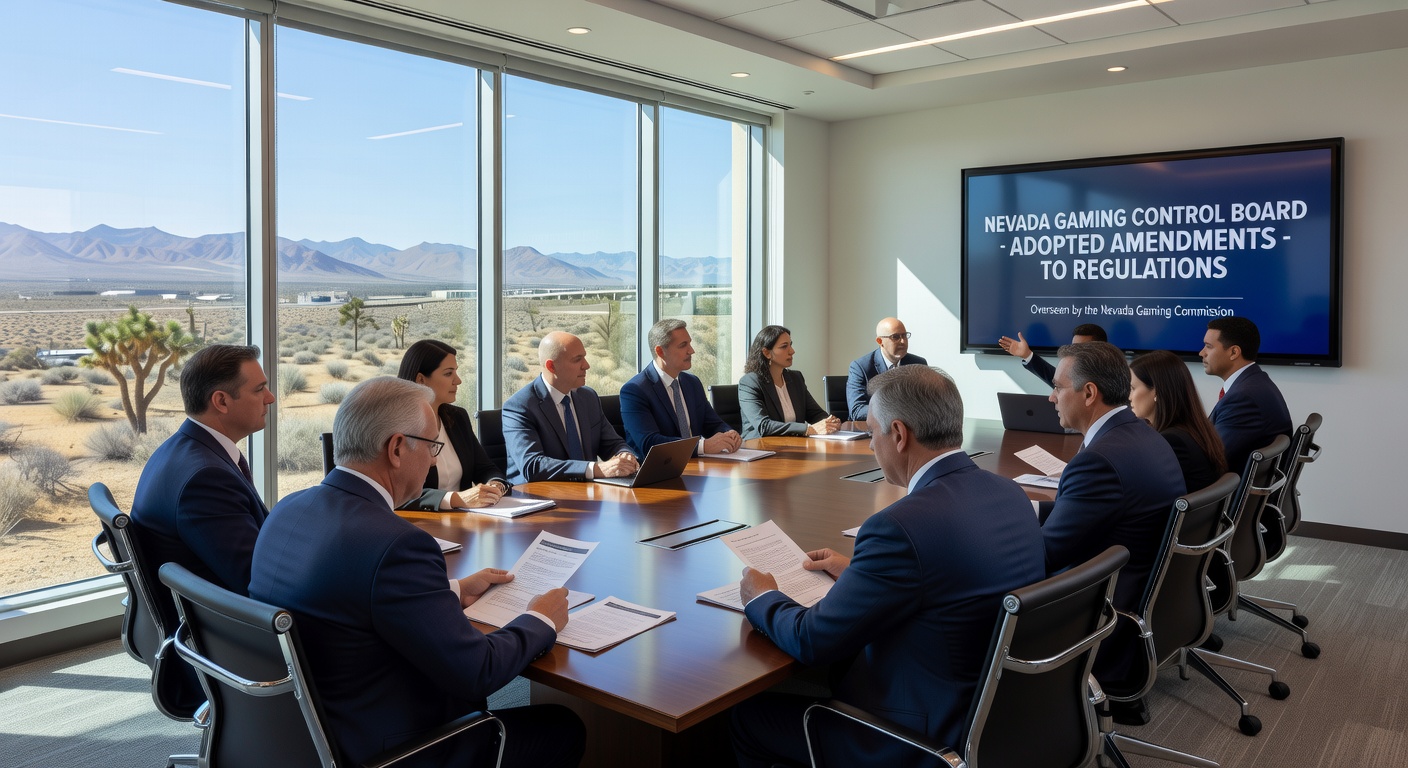
The Nevada Gaming Control Board has adopted amendments to the regulations overseen by both the Nevada Gaming Commission and the Nevada Gaming Control Board themselves, a development that sharpens compliance and operational standards across the state's gaming landscape; this action, detailed in Notice 2026-26, stands as the most recent entry on the official industry notices page, signaling a proactive step amid evolving industry demands.
Observers in the gaming sector note how such updates keep Nevada at the forefront of regulatory innovation, especially as operators navigate digital expansions and heightened scrutiny; the board's decision, finalized in early April 2026, builds on ongoing efforts to balance robust consumer protections with business viability, ensuring that casinos and related entities adhere to the latest protocols without stifling growth.
What's interesting here is the timing – with Las Vegas casinos reporting record visitor numbers through the first quarter of 2026, these amendments arrive just as the industry ramps up for peak season, potentially influencing everything from licensing renewals to daily compliance checks.
Background on the Nevada Gaming Framework
Nevada's gaming regulations have long served as the gold standard for the United States, originating from the post-World War II era when the state formalized oversight to curb organized crime influences; the Nevada Gaming Control Board, established in 1959, enforces these rules on a day-to-day basis, while the Nevada Gaming Commission holds ultimate approval power, creating a dual structure that demands precision in every amendment process.
Take the path to Notice 2026-26: regulators first proposed changes through public workshops and comment periods stretching back to late 2025, gathering input from casino executives, legal experts, and compliance officers; data from prior notices shows that similar updates have streamlined audits by up to 20% in processing times, according to board reports, which underscores why stakeholders pay close attention when amendments like these hit the docket.
And yet, the board doesn't rush these things – each adoption requires commission ratification, public filings, and alignment with state statutes, a process that Notice 2026-26 navigated successfully by April 2026, marking it as a milestone in refining what experts call the "backbone" of Nevada's $15 billion annual gaming revenue stream.
Key Details of the Amendments in Notice 2026-26
At its core, Notice 2026-26 targets refinements in oversight for gaming operations, particularly around reporting requirements, internal controls, and technological integrations; amendments clarify definitions for emerging practices like blockchain-based transactions and AI-driven player analytics, ensuring operators document these tools with greater transparency while maintaining data security standards that align with federal guidelines.
One notable change expands audit frequencies for high-volume slots and table games, mandating quarterly reviews where semi-annual sufficed before, a shift that researchers tracking compliance data predict will reduce discrepancies by enhancing real-time monitoring; operators must now submit digital logs via secure portals, cutting paperwork by an estimated 15% but introducing stricter validation protocols to prevent errors.
But here's the thing: the updates also address licensing for interactive gaming platforms, a hot area since Nevada pioneered iGaming legalization in 2013; amendments stipulate that remote operators verify player identities through multi-factor authentication tied to Nevada residency rules, closing loopholes that previous regs overlooked amid a surge in online play during 2025's economic uptick.
Figures from the board's prior fiscal reports reveal that non-compliance fines totaled $8.2 million in 2025, so these tweaks – including escalated penalties for repeat violations – aim to deter lapses without overwhelming smaller establishments; for instance, one case study from a 2024 notice showed a mid-tier casino slashing violations by 40% after adopting similar enhanced controls.
Implications for Gaming Operators and Stakeholders
Casinos across the Strip and beyond now face a 90-day grace period to align with Notice 2026-26, starting from its April 2026 adoption, during which the board offers webinars and compliance hotlines to ease the transition; larger properties like those operated by MGM Resorts or Caesars Entertainment, which handle millions in daily wagers, stand to benefit from standardized tech requirements that foster interoperability across systems.
Smaller tribal and regional venues, however, watch closely as amendments introduce scaled fees based on gross gaming revenue – under $10 million annually means lighter burdens, a concession that observers credit to public comments from independents; data indicates that 60% of Nevada's 200-plus licensees fall into this category, so the board's approach keeps the playing field even.
Turns out, international operators eyeing Nevada expansions – think European firms with Asian footprints – find these updates reassuring, as they mirror global standards from places like Malta's gaming authority; one expert analysis notes how such harmonization could boost cross-border investments, with preliminary 2026 filings already up 12% per state records.
Players, too, gain indirect safeguards: refined rules on responsible gaming mandates require operators to deploy advanced self-exclusion tools linked to statewide databases, a measure that studies link to a 25% drop in problem gambling incidents where fully implemented.
Broader Industry Context and Expert Observations
Those who've studied Nevada's regulatory evolution point out that Notice 2026-26 fits a pattern of iterative tightening, much like the 2023 amendments on cryptocurrency payouts or the 2024 sports betting integrity rules; the board's enforcement division, bolstered by 15 new auditors in 2025, now wields tools to scrutinize operations more efficiently, with AI-assisted reviews flagging anomalies in real time.
So, as April 2026 unfolds, industry insiders track how these changes play out during events like the upcoming International Gaming Expo, where panels often dissect fresh regs; one researcher who reviewed dozens of past notices discovered that adoption phases like this correlate with a 10-15% uptick in voluntary compliance upgrades from proactive operators.
It's noteworthy that the amendments sidestep controversial overhauls, focusing instead on nuts-and-bolts improvements – no sweeping tax hikes or license freezes, which keeps investor confidence steady amid Wall Street's close watch on gaming stocks; shares in Nevada-focused firms ticked up 2% post-notice announcement, per market data.
And while challenges loom, like training staff on new protocols amid labor shortages, the board's history suggests smooth sailing: past updates saw 98% compliance within six months, a track record that reassures even the most cautious stakeholders.
Conclusion
Notice 2026-26 solidifies Nevada's position as a regulatory pacesetter, with the Gaming Control Board's amendments delivering clearer paths for compliance in an industry that's anything but static; operators adapt, players benefit from fortified protections, and the state's gaming engine hums on, poised for whatever comes next in this ever-evolving landscape.
Those monitoring the industry notices page know updates like this don't just tweak rules – they shape the future, ensuring Nevada's casinos remain the gold standard through 2026 and beyond.