The Development of Blockchain-Based Reward Mechanisms in Smartphone Casino Platforms
Written by Klara Werner · Jun 29, 2026

The Development of Blockchain-Based Reward Mechanisms in Smartphone Casino Platforms
Smartphone casino applications began incorporating blockchain elements into their reward structures around the mid-2010s, shifting away from centralized databases that handled points and bonuses through traditional servers. Early implementations focused on basic token issuance, yet developers quickly recognized the potential for immutable ledgers to record player activity across multiple devices without relying on single points of failure. By 2020 several operators had tested private blockchains to manage loyalty tiers, and the approach gained traction as transaction speeds improved on networks like Ethereum and newer layer-two solutions.
Initial Experiments with Distributed Ledgers
Research from academic groups at institutions such as the University of Nevada, Las Vegas tracked how initial pilots used smart contracts to automate bonus releases once players met predefined wagering thresholds. Those contracts executed without manual intervention, cutting administrative overhead and reducing disputes over missing credits. Data compiled by the Canadian Gaming Association indicates that operators adopting these methods saw a measurable drop in reconciliation errors between 2018 and 2022, while player retention metrics remained stable across tested markets.
Platforms also experimented with public blockchains for transparency reports, allowing users to verify that reward pools had not been altered after deposits. One study published by the Gambling Research Exchange Ontario examined transaction logs from select apps and found that on-chain verification reduced support tickets related to bonus discrepancies by roughly 18 percent during the observation period. Developers noted that wallet integration added friction for some users, prompting the creation of simplified in-app custodial options that still anchored final balances to the blockchain.
Expansion Through Smart Contract Automation
By 2023 reward distribution had moved beyond static points systems toward dynamic structures governed by smart contracts that adjusted prize pools based on real-time participation levels. These contracts pulled data from oracle services to confirm game outcomes before releasing tokens, and several European operators integrated similar logic into their mobile offerings. Figures released by the European Gaming and Betting Association reveal that blockchain-linked reward volumes grew steadily through 2025, particularly in jurisdictions where regulators permitted tokenized incentives under existing digital currency frameworks.
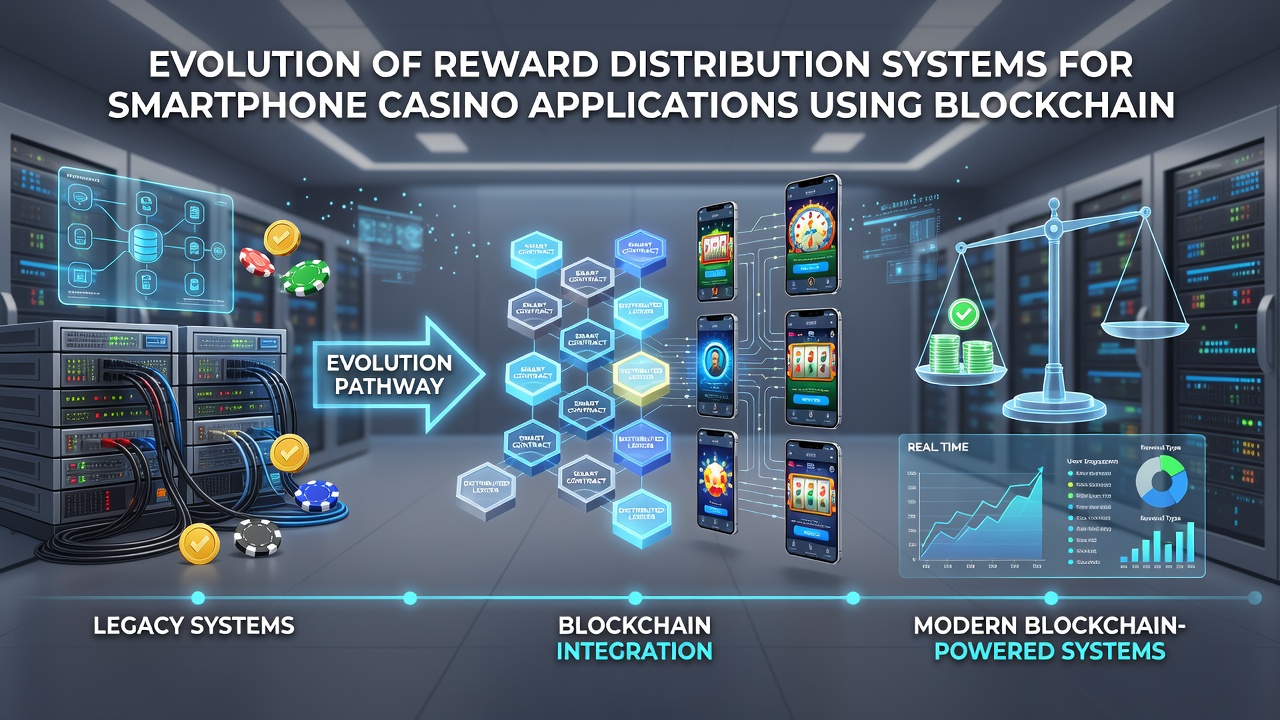
June 2026 brought additional clarity when several jurisdictions updated guidance on tokenized rewards, prompting operators to refine their contract parameters for compliance. The changes emphasized audit trails that regulators could query directly from public ledgers, and developers responded by embedding permissioned access layers within otherwise open networks. Observers at industry conferences reported that cross-border player accounts now carried portable reward histories, allowing seamless transfers between partnered applications without duplicating balances on separate servers.
Security and Scalability Adjustments
Security teams addressed early vulnerabilities around oracle manipulation by adopting multi-source verification and threshold signatures. A report issued by the National Council on Problem Gambling highlighted that transparent on-chain records also supported responsible gaming tools, because limit-setting functions could be encoded directly into contracts and enforced automatically. Scalability remained a concern until layer-two rollups reduced confirmation times to under two seconds, enabling real-time reward notifications inside smartphone sessions.
Operators further integrated zero-knowledge proofs to shield individual transaction details while still proving that total reward pools matched declared amounts. This technique satisfied privacy regulations in multiple regions without sacrificing the auditability that originally attracted developers to blockchain architectures. Testing conducted across Asian and North American markets showed consistent performance once these cryptographic layers stabilized, and adoption rates climbed accordingly through the first half of 2026.
Conclusion
The progression from simple token ledgers to sophisticated contract-driven systems illustrates how blockchain technology has altered the mechanics of reward distribution in smartphone casino applications. Continued refinements in speed, privacy, and regulatory alignment suggest further evolution remains likely, driven by both technical improvements and shifting compliance requirements across jurisdictions.